
Table of Contents
We’ve all had those weeks when life takes over — you’re juggling work, feeling under the weather, or just not in the creative zone.
This is exactly when having a content planning system in place really matters.
Because when your content is organised ahead of time, you can still show up for your audience — not through force, but through preparation.
That’s the power of a system that works for you, not against you.
Today, I’m sharing how I actually plan and organise my content behind the scenes.
It’s simple, flexible, and designed to help me stay visible sustainably (even when I’m not firing on all cylinders).
Building a content planning system that works for you
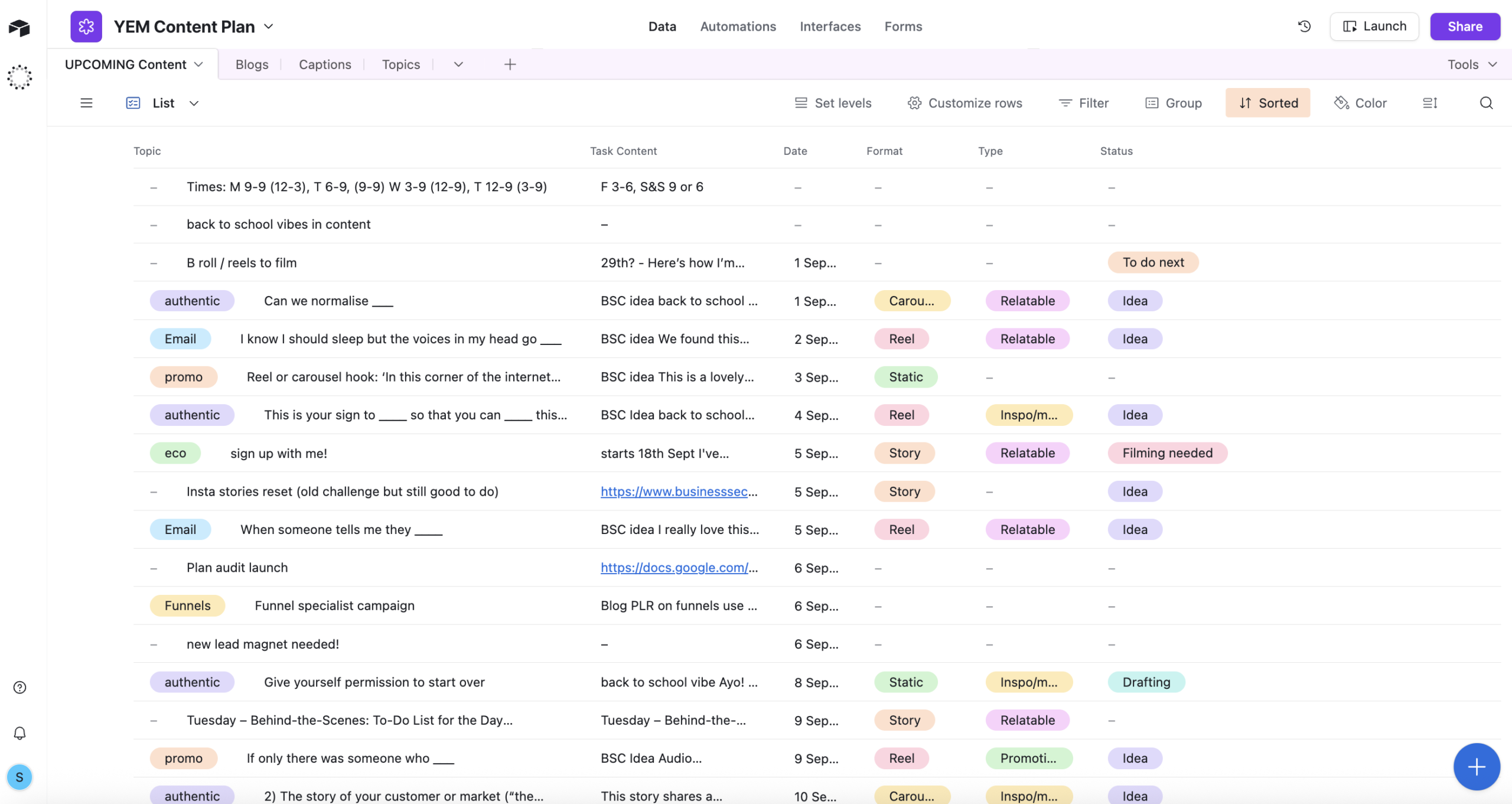
💡 Airtable – The core of my content planning system
Airtable is where all my day-to-day content lives.
After years of trial and error, I’ve landed on a system that just works.
I keep four main tabs: one for blogs, and two overflow tabs for caption ideas and topic prompts.
But the real magic happens in my “Upcoming Content” tab.
Here’s what I track:
- Topic/theme – e.g. Authentic, Content, Email, Funnel, Promo, Other
- Key point – the main message or takeaway
- Caption/idea – ready to expand into a post
- Date – when it’s going live
- Format – carousel, reel, static post, story, etc.
- Post type – relatable, educational, inspirational, or promotional
- Status – idea, to-do next, filming needed, drafting, or scheduled
I also track whether filming or photography is needed, so I can batch visuals all at once and remove blockers to posting.
The key is flexibility.
I often move things around depending on my energy, availability, or what’s trending — but because the thinking is already done, I’m never starting from scratch.
It’s not always polished, and it’s rarely perfect — but it works.
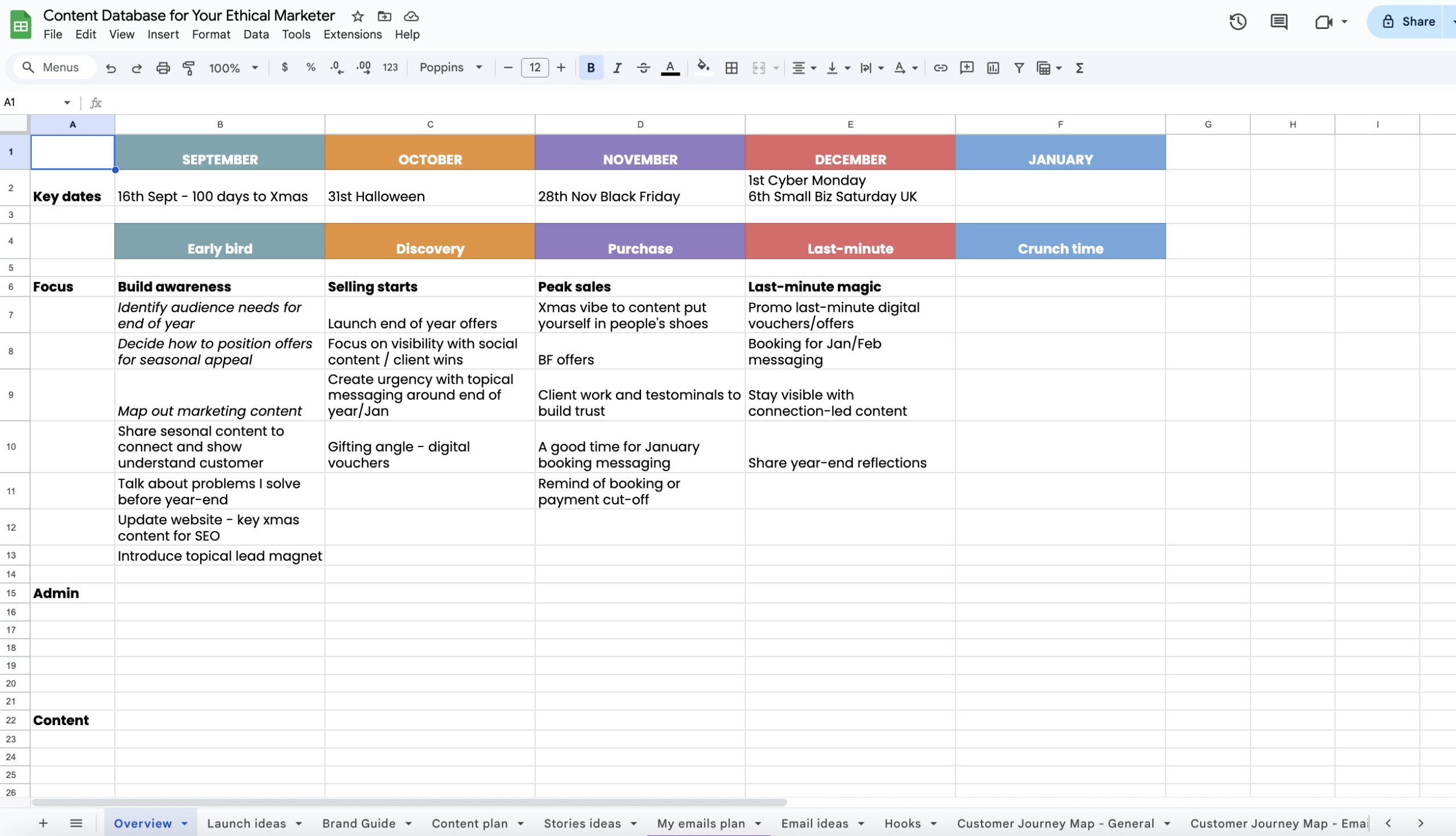
🧠 Google Sheets – The messier ‘Content Database’
This one’s less of a plan and more of a strategy brain dump.
It’s where I store all my bigger-picture ideas and long-term content themes.
It’s not pretty (and it’s not meant to be), but it’s invaluable for keeping all my thoughts in one place.
The point is: everything content-related has a home.
🗂 ToDoist – My second brain, keeping my content planning system on track
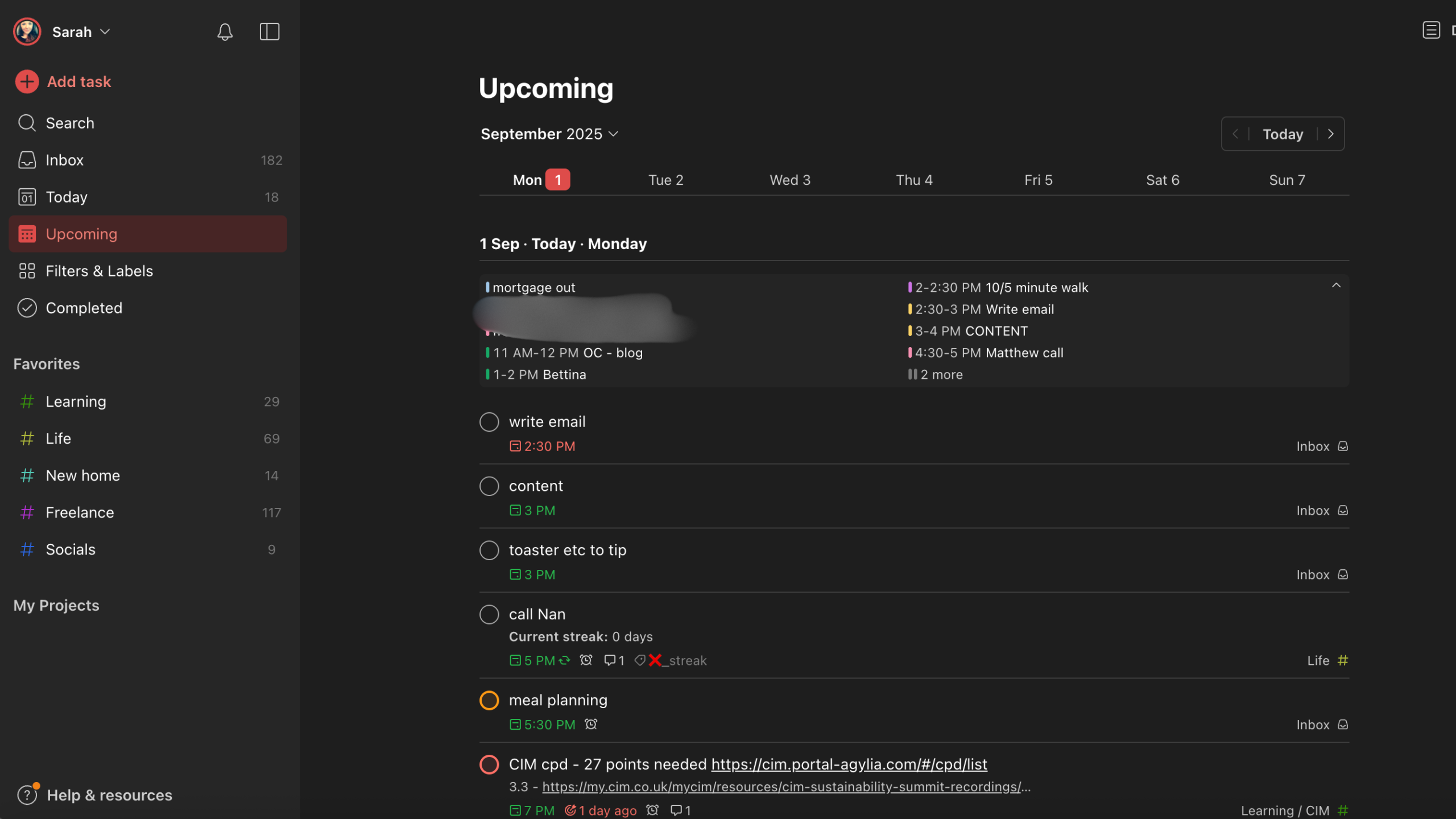
I’ve used ToDoist for almost a decade, and it’s become my personal assistant for everything — from “wash hair” to full business plans.
I schedule tasks by time, priority, and category (client work, house stuff, business planning, etc.), and it syncs with Google Calendar so I get a realistic view of my day.
The trick with any tool like this is that it’s only as good as the information you put into it.
I’ve refined my setup over time so it reflects my actual capacity — not what I wish I could do.
If I still have 10 high-priority tasks sitting there at 4pm, it’s a cue to reschedule, reprioritise, or cut something out.
Why I’m Sharing This
Because content planning is what helps me stay visible sustainably.
It gives structure to my creativity and space to breathe — so I can keep showing up for my audience (even when life gets in the way).
It’s not about perfection.
It’s about building a system that fits you — your energy, your workload, your life.
Want Help Building a Plan That Works for You?
If you’re reading this thinking, “I wish I had that kind of structure,” — I can help.
I work 1:1 with ethical, service-based business owners to create content and email marketing systems that fit around real life.
So you can grow your business without burnout, and keep showing up consistently — with ease, not exhaustion.
Having a content planning system that fits your life is what keeps you visible — and sane — long term.

0 Comments